
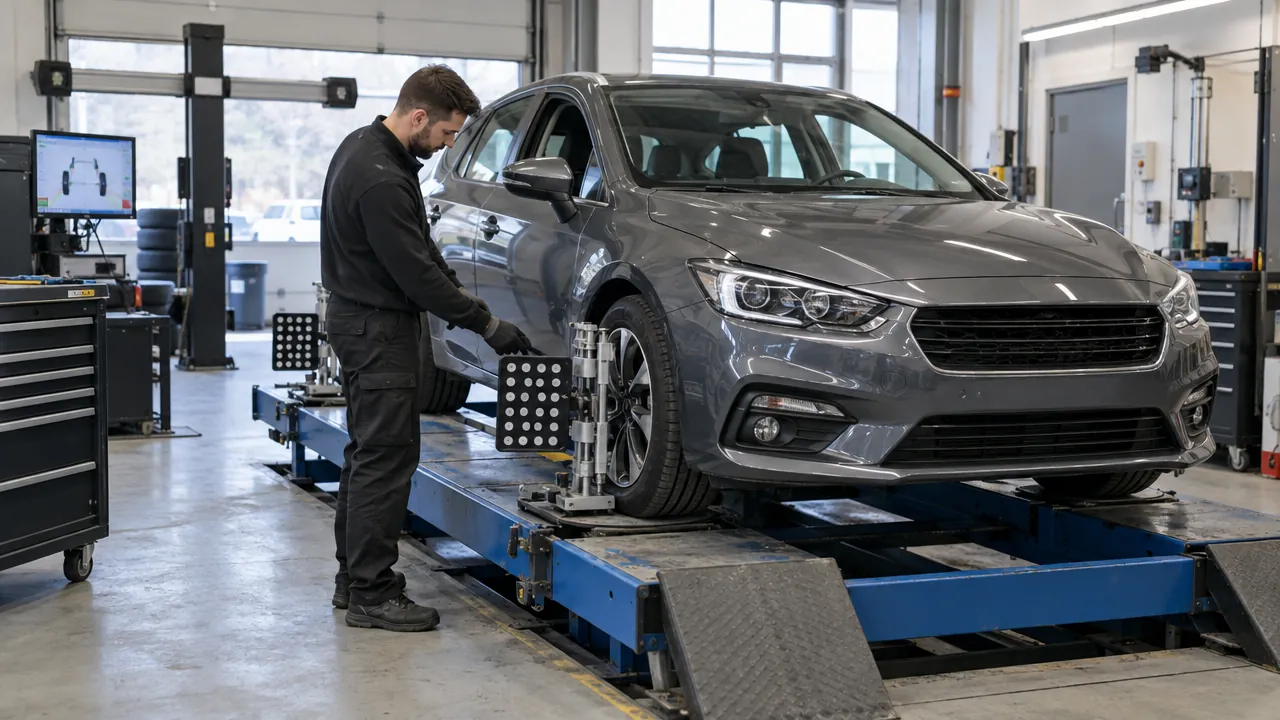
What is wheel alignment?
Wheel alignment, also called tracking, is the adjustment of a car’s suspension angles so its wheels meet the manufacturer’s specifications. The key angles are camber, toe and caster. Together, they influence how the tyres meet the road, how the car handles and whether the tyres wear evenly. A technician checks these angles and makes adjustments where needed.
When the wheels are correctly aligned, the car is better able to travel straight and respond as expected to steering. Alignment also reduces uneven tyre wear and can improve fuel efficiency by reducing rolling resistance. It therefore affects both the way a car drives and the rate at which its tyres wear.
Why does wheel alignment matter?
The angles specified by the manufacturer help the tyres maintain even contact with the road. Keeping the wheels in those positions supports steering response, handling and stability, making the car feel safer and more comfortable to drive. Wheels that have moved out of alignment can affect several of these qualities at the same time.
Misaligned wheels may cause tyres to wear prematurely or unevenly, while steering response and handling can suffer. Suspension and steering parts may also wear more quickly, potentially leading to more expensive repairs. If the misalignment increases rolling resistance, the engine has to work harder and fuel consumption can rise.
Regular alignment checks can help extend tyre life, support fuel efficiency and avoid unnecessary costs associated with excessive tyre or suspension wear. A check establishes whether the wheel angles still match the manufacturer’s specifications, rather than relying only on how the car feels to drive.
When should you have alignment checked?
Wheel alignment is an important part of maintaining a car. Correctly positioned wheels help it handle as intended, encourage even tyre wear and can improve fuel efficiency. If misalignment is left unchecked, steering, handling and driving comfort may all be affected. You do not have to wait for the car to become difficult to control before arranging a check.
Having new tyres fitted is a useful opportunity to check the alignment. Correct wheel positioning helps the new tyres wear evenly, maximises their useful life and keeps the car handling as it should. Many drivers also arrange an alignment check alongside their annual service, providing another opportunity to identify a problem before it causes avoidable wear.
What are the signs of misalignment?
One noticeable sign is a car pulling to the left or right while travelling on a straight road. This may indicate that the wheels are not positioned correctly and can affect handling and stability. Uneven or unusually rapid tyre wear is another common warning sign, especially when one tyre wears faster than the others or one edge of its tread wears more heavily.
That pattern of wear may mean the tyres are not making proper contact with the road. It can shorten tyre life, bringing forward replacement and making it a more frequent expense. An off-centre steering wheel when driving straight is another possible sign, as is a car that feels less stable or harder to control than usual.
Other signs include unusual tyre wear after hitting a pothole or kerb, increased fuel consumption and unusual noises when turning corners. These observations suggest that a check may be worthwhile; they do not, on their own, establish that alignment is the cause. A professional can measure the wheel angles and determine whether adjustment is needed. Correcting misalignment can improve handling, promote even tyre wear and support efficient driving.
How much does wheel alignment cost?
The cost depends on the type of alignment the car needs. A standard service may cover the front wheels, while a four-wheel alignment typically costs more because it involves additional checks and adjustments. When considering the cost, establish which service is being offered and whether it matches what needs checking on your car.
How long does wheel alignment take?
Wheel alignment usually takes around 40 minutes to an hour, depending on the vehicle and the service required. A standard two-wheel alignment can often be completed in up to 40 minutes. A four-wheel alignment or more complex adjustments may take longer because there are more angles to check and potentially more to correct.
During the service, a technician checks the wheel angles and adjusts them to the manufacturer’s specifications. The time required can change if the checks reveal another issue, such as worn suspension components, or if further adjustments are needed. Keeping the wheels correctly aligned can improve the driving experience, extend tyre life and support safer journeys.