
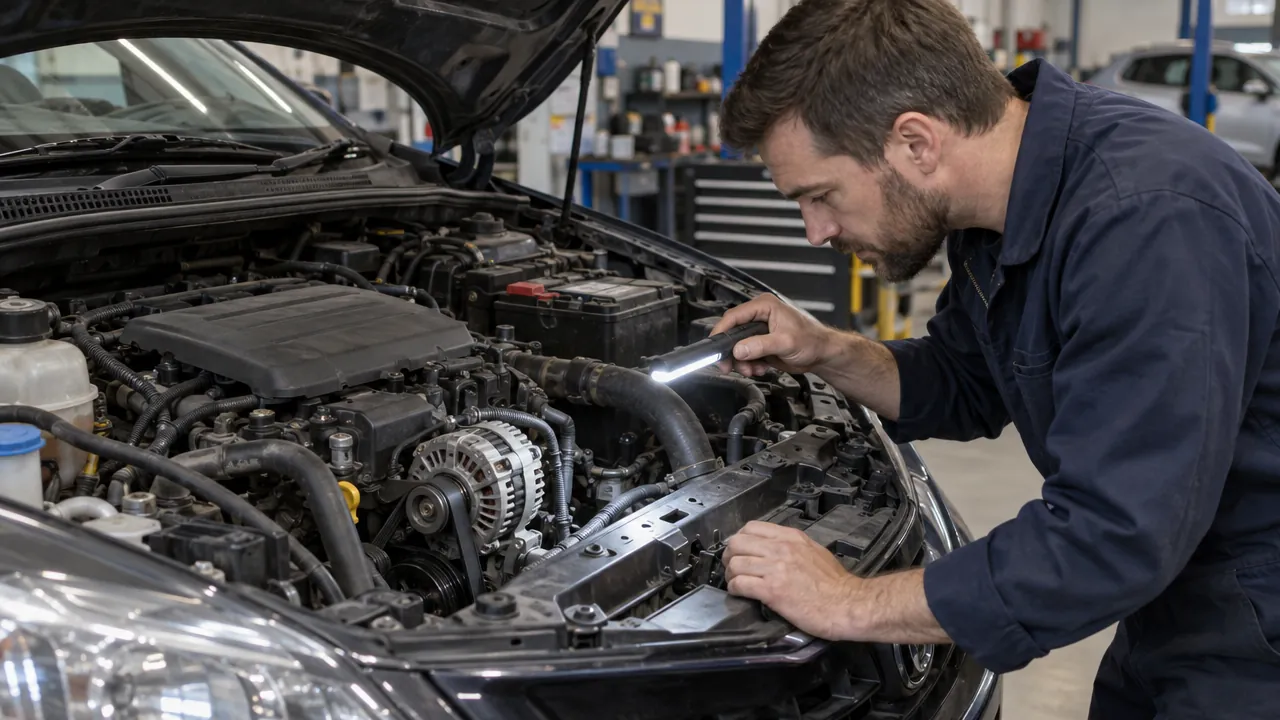
Keeping an alternator in good working order is an important part of maintaining a car. It converts mechanical energy into electricity for the vehicle’s electrical systems and accessories. Wear, faults, damage and exposure to the elements can all cause problems or lead to failure. Understanding what it does, how failure can show up and whether repair is possible helps put replacement costs in context.
What is an alternator?
The alternator generates electrical power while the engine is running. Driven by the engine through a belt and a spinning rotor, it produces an electrical current that the vehicle’s systems use. At the same time, it keeps the battery charged. This matters both for starting the engine and for running electrical components, including warning lights, indicators, entertainment systems and air conditioning.
The alternator therefore has two connected jobs: supplying electricity for equipment in the car and maintaining the battery’s charge while the engine runs. If it is not functioning properly, either job can be affected. Regular maintenance and servicing can help keep it working as it should.
Signs of a faulty alternator
The clearest sign of a possible alternator fault is a warning light on the dashboard, often yellow and shaped like a battery. Lights can offer other clues: headlights or interior lights may look dimmer than they used to, or flicker on and off. These changes can appear alongside problems with other electrical equipment.
Electric windows, air conditioning or the entertainment system may stop working correctly. Repeatedly flat batteries and difficulty starting the engine can also point to an alternator issue, although difficulty starting may indicate a more serious problem within the engine itself. These symptoms do not always establish which part is at fault, so having the alternator checked is advisable.
A driver travelling at speed may hear a loud grinding noise from the engine. That may be followed by a smell of burning rubber and an unexpected engine stall. If you notice any of these warning signs, have the alternator checked rather than assuming the battery or another electrical component is the sole cause. The combination of electrical symptoms and a stall is another reason not to dismiss the signs.
Can an alternator be repaired?
An alternator can often be repaired, but whether that is practical depends on the type and extent of the damage. Worn or noisy bearings can be replaced, and damaged or frayed wiring can sometimes be repaired without fitting an entirely new alternator. In other cases, removing dirt and debris may improve how the alternator and connected components function. Which approach helps depends on what is actually causing the fault.
If those measures do not resolve the problem, the choices are replacement or, for some alternators, a rebuild involving replacement of internal components. The scope of the fault matters: cleaning will not necessarily resolve damage to parts, and a repair may not be suitable for every faulty unit. In most cases, replacing the alternator may be the more cost-effective option.
Alternator replacement costs
In the UK, drivers can expect an alternator replacement to cost between £250 and £800. The bill can be significantly higher if the surrounding area is damaged, or depending on the vehicle’s make, model, age and condition. Alternators can be among the more expensive parts of a vehicle to fix or replace, so the quoted range is not a fixed price for every car.
UK figures from RAC Mobile Mechanics put the average quoted alternator replacement price at £513, based on quotes from 1 October to 31 December 2025. A separate figure from WhoCanFixMyCar puts the average price for parts and labour at around £438.62, as of July 2026. These figures come from different sources and should not be treated as a guaranteed quote. The actual cost depends on the car and any additional damage.