
A wheel bearing is easy to overlook until a noise or vibration draws attention to it. It helps a wheel turn while carrying the forces placed on it during a journey. Wear can affect more than comfort: leaving a damaged bearing in place may harm the wheel assembly and compromise safety. Knowing the possible symptoms helps you seek a diagnosis, while understanding the repair makes it easier to discuss the work and its cost with a garage.
What does a wheel bearing do?
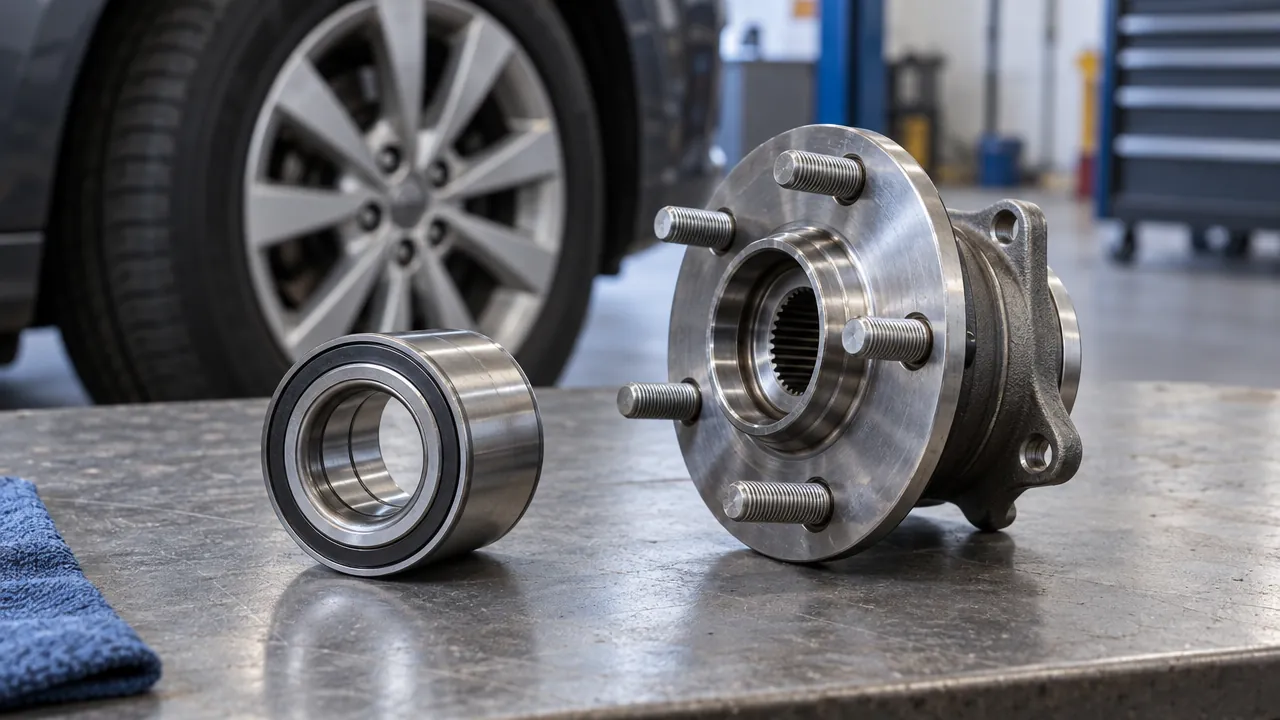
A wheel bearing contains steel balls or rollers running between metal rings called bearing races. It is part of the wheel hub assembly, which connects the wheel to the vehicle’s suspension. The bearing has two main jobs. It supports the vehicle’s weight and the forces generated during acceleration, braking and cornering. At the same time, it lets the wheel rotate smoothly with little resistance. Reducing friction helps limit wear and excessive heat. The bearing must keep doing both jobs while the wheel is repeatedly loaded and turned; smooth rotation alone is not enough if it can no longer support those forces.
Constant use and exposure to road conditions can eventually wear a bearing out. Lack of maintenance may contribute to problems or allow symptoms to go unnoticed, although many bearings are sealed units rather than parts a driver can lubricate during routine checks. Servicing and regular attention to unusual sounds can help reveal a developing fault. They cannot restore a bearing that has already worn or been damaged. In that case, prompt inspection and replacement help protect the vehicle’s safety and prevent further damage to nearby components.
Where is the bearing located?
The bearing is usually housed within the wheel hub assembly. On many vehicles, it is a sealed unit pressed into the hub, with its balls or rollers between inner and outer races. The hub assembly is then mounted on the vehicle’s spindle or axle shaft. These descriptions explain where to look, but they are not instructions to remove a bearing: how the hub comes apart varies with its design. The location of the bearing and the way it is retained determine which parts must be removed to reach it.
Depending on the vehicle, there may be one or two bearings at a wheel. Each front wheel of a front-wheel-drive car usually has a bearing assembly, while rear-wheel-drive vehicles may have wheel bearings at both the front and rear. Layouts differ between models and manufacturers, so those broad examples cannot identify the correct replacement part for a particular car. Check the vehicle’s manual or ask a garage to establish the bearing’s location, type and repair requirements before buying a part or taking the hub apart.
How can you tell if a wheel bearing is failing?
Possible signs include humming or grinding from near a wheel, vibration, uneven tyre wear and excessive play or looseness at the wheel. A noise may draw attention to a bearing, but hearing one does not establish that the bearing is faulty; a strange sound can signal another problem that also needs attention. Nor does every symptom tell you how much damage has occurred. A qualified mechanic should inspect the wheel assembly to confirm the cause before a replacement is agreed. If a bearing is damaged or worn, it should be dealt with promptly.
Ordinary wear is one possible cause of bearing noise. Over time and with exposure to road conditions, the balls or rollers may lose their smooth running surfaces, increasing friction. Lubrication matters too: if a bearing is not adequately lubricated, or its lubricant has deteriorated, friction and noise can increase. Dirt, debris or water entering the bearing can interfere with rotation and accelerate wear. These explanations are not mutually exclusive. Contamination, for instance, may damage the running surfaces that allow the wheel to turn smoothly in the first place.
Installation and driving conditions can also play a part. A bearing fitted incorrectly during a repair may wear prematurely if it is misaligned or secured with insufficient torque. Carrying heavy loads, striking potholes or experiencing other impacts can add stress, causing damage that eventually becomes audible. Whatever the suspected cause, ignoring a worn bearing risks further damage to the wheel assembly and may affect the car’s performance and safety. A garage or qualified mechanic can assess the fault and determine what needs repairing rather than treating noise alone as a diagnosis.
How much might replacement cost?
The source gives a rough figure of £150 to £250 for a single new wheel bearing. It is an indicative range, not a guaranteed or current price: the vehicle’s make and model, the bearing’s position and whether an original equipment manufacturer part is selected can change the amount. An actual price may fall above or below that range. Check the part against your specific vehicle and ask a parts supplier or garage for a suitable quote. A price for a bearing on its own should not automatically be taken as the full cost of having it fitted.
For replacement including parts and labour, the source quotes an average of about £258, attributed to whocanfixmycar and labelled July 2026, rounded to the nearest pound. Treat it as an indicative, dated figure rather than a quote for your car. Labour charges differ between mechanics, while the make, model and type of bearing required can affect the total. The £150 to £250 single-bearing range and the average fitted cost describe different estimates; they are not a promise that any particular job will fall between those amounts or cost exactly the average.
The source recommends considering replacement of both bearings on the same axle at the same time, even if only one shows signs of damage or wear. Its reasoning is that this may help maintain balanced performance and reduce the chance of having to replace the other bearing soon afterwards. That recommendation does not establish that the second bearing has failed. Ask the mechanic what inspection found, then compare the cost of repairing the confirmed fault alone with the cost of replacing both. This makes the additional expense and the reason for it clearer before work begins.
Can you replace a wheel bearing yourself?
Replacement requires mechanical knowledge, a correctly matched part and suitable tools; some designs need equipment to press a bearing into or out of a hub. The outline below describes the general sequence, not a procedure for every model. Consult the vehicle’s repair manual for its precise dismantling, installation and tightening requirements. If you cannot support the car safely, identify the retaining parts or follow the specified method, use a qualified mechanic or garage instead. Incorrect fitting may damage the new bearing, while an improperly secured wheel or disturbed brake components create additional safety risks.
First, confirm that the replacement bearing is suitable for the vehicle. Tools may include a jack, axle stands, wheel brace, socket set, torque wrench, pry bar and bearing press or an appropriate alternative. Bearing grease may be needed where the repair instructions specify it; do not assume a sealed replacement needs extra grease. Park on a flat surface, apply the parking brake and chock the wheels. Preparing the correct part, tools and instructions before lifting the vehicle helps avoid leaving a dismantled car while searching for equipment needed to complete the repair.
Loosen the wheel nuts as appropriate, then jack up the corner where the bearing is to be replaced. Position axle stands correctly to support the vehicle; do not rely on the jack while working underneath or around the hub. Remove the wheel and set it aside. If brake parts obstruct access, dismantle the relevant assembly in the order specified in the repair manual. That step differs between vehicles. Keep track of the removed components and their positions so the brake assembly can be reinstalled as instructed after the bearing is fitted.
Locate the bearing assembly within the hub and identify any bolts, clips or other retaining hardware. Remove them using the method specified for the car. A suitable levering tool may help remove an assembly on some designs; a bearing pressed into the hub may require a press or similar equipment. Do not assume that applying more force is the right solution if the part will not move. The method matters because the hub and adjacent components must remain suitable for reassembly, and an overlooked retainer could prevent safe removal.
Install the new bearing according to its instructions and the vehicle’s repair procedure. Where specified, apply the suitable amount of bearing grease to the inner race; otherwise, follow the guidance for the particular sealed unit. Align the bearing with the hub, then press it into place or secure the assembly by the method required for that design. Check that it is fully seated and that its retaining parts are correctly fitted. Use the manufacturer’s tightening specifications rather than guessing, since improper installation or insufficient torque can lead to premature wear and noise.
Reassemble any brake parts removed for access, including the brake disc, calliper and associated components where applicable, following the repair manual. If a brake fault becomes apparent, it needs its own repair; replacing the bearing will not correct it. Refit the wheel and secure its nuts, then carefully remove the axle stands and lower the vehicle. Finally, use a torque wrench to tighten the wheel nuts to the manufacturer’s specified setting. Correct tightening helps keep the wheel properly attached when the car is driven.
Because bearing layouts and removal methods differ, this overview cannot replace vehicle-specific instructions or a diagnosis. If the cause of the symptoms, the tools required or any stage of reassembly is uncertain, consult the repair manual and seek help from a local garage or qualified mobile mechanic. The aim is not merely to stop a noise: it is to establish what failed and return the bearing, wheel and any disturbed brake parts to safe working order.