
Why locking wheel nuts matter
Locking wheel nuts have become common on UK cars because they make wheel theft more difficult. An ordinary wheel nut can be removed with a standard tool; a locking nut has a shaped recess that requires a matching key. Some older vehicles may still have only ordinary nuts. If yours does, replacing at least one nut on each wheel with a suitable locking nut can deter thieves, though it cannot guarantee against theft. Check what is fitted to each wheel so you know whether a key is needed.
How to recognise the key
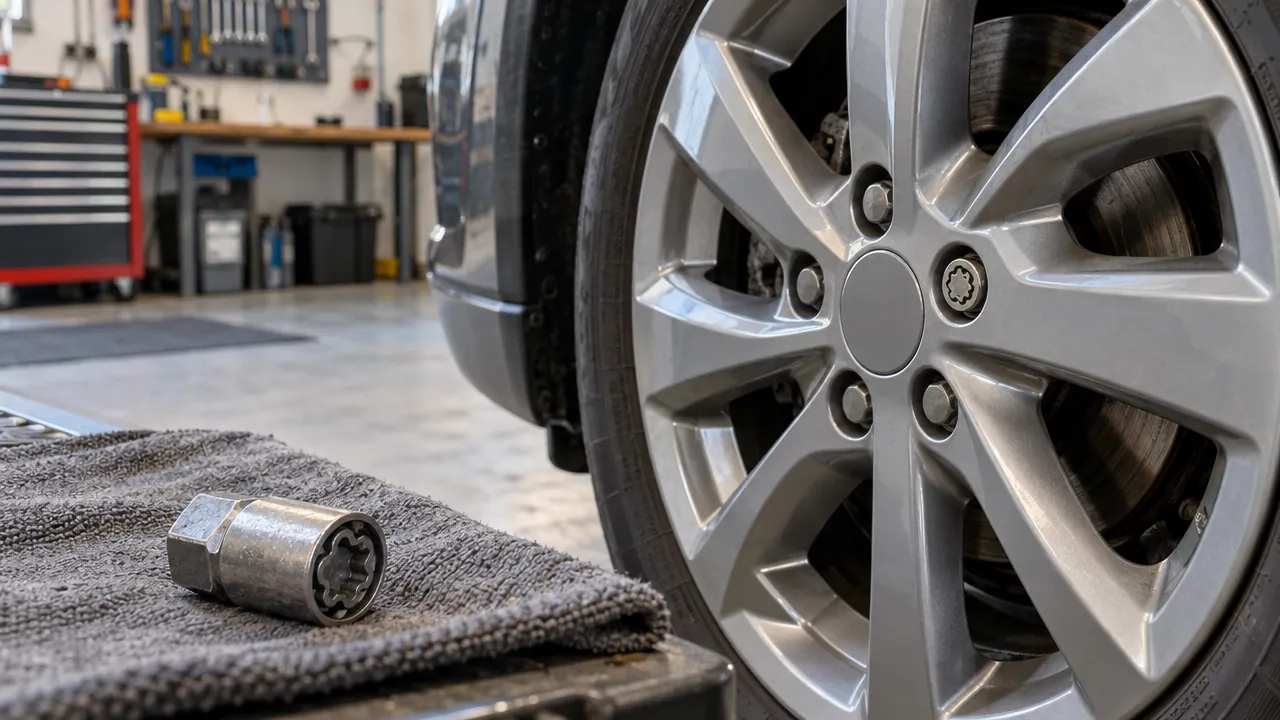
A locking wheel nut key is an adaptor. One end is roughly cylindrical and has a pattern that engages with the locking nut; the other is hexagonal so a wheel wrench can turn it. Keys may look alike, but they are not one-size-fits-all. Each locking nut has a particular recess, and the key must match it. For example, do not assume a key supplied with a Renault will fit the locking nuts on a BMW. The important test is whether it fits the nuts on your car.
When you need the key
If your wheels have locking nuts, the correct key is needed to release them before the wheels can be removed. Without it, a garage cannot change the tyres in the usual way. Wheel removal may also be necessary for work on alloy wheels, a service or a brake check. Bring the key to an appointment where any of this work is planned, and tell the garage staff where it is. If your wheels have only ordinary nuts, you do not need a locking wheel nut key.
Find the key before your appointment, rather than discovering that it is missing when work begins. Check that the adaptor matches the nuts fitted to the car: a similar-looking key may not fit. After the work, make sure the key is returned to its storage place.
What if the key is lost?
A replacement locking wheel nut key can be ordered, but identifying the right one and waiting for it to arrive may take time. That can delay a tyre change or other work requiring wheel removal. Keep the key somewhere secure in the car so it is available at a garage or when a wheel needs attention away from home. Make sure you know its location, particularly if you have recently bought the car or someone else has handled the key during previous work.
Roadside punctures and run-flat tyres
A serious puncture may require a roadside wheel change. If that wheel has a locking nut and the key is missing, the wheel cannot be removed in the usual way. Where fitted, run-flat tyres may let you continue driving for a short period instead, giving you an opportunity to reach a tyre garage without changing the wheel at the roadside. They do not remove the need for the matching key when the wheel eventually has to come off. Locate yours before a puncture makes it urgent.