
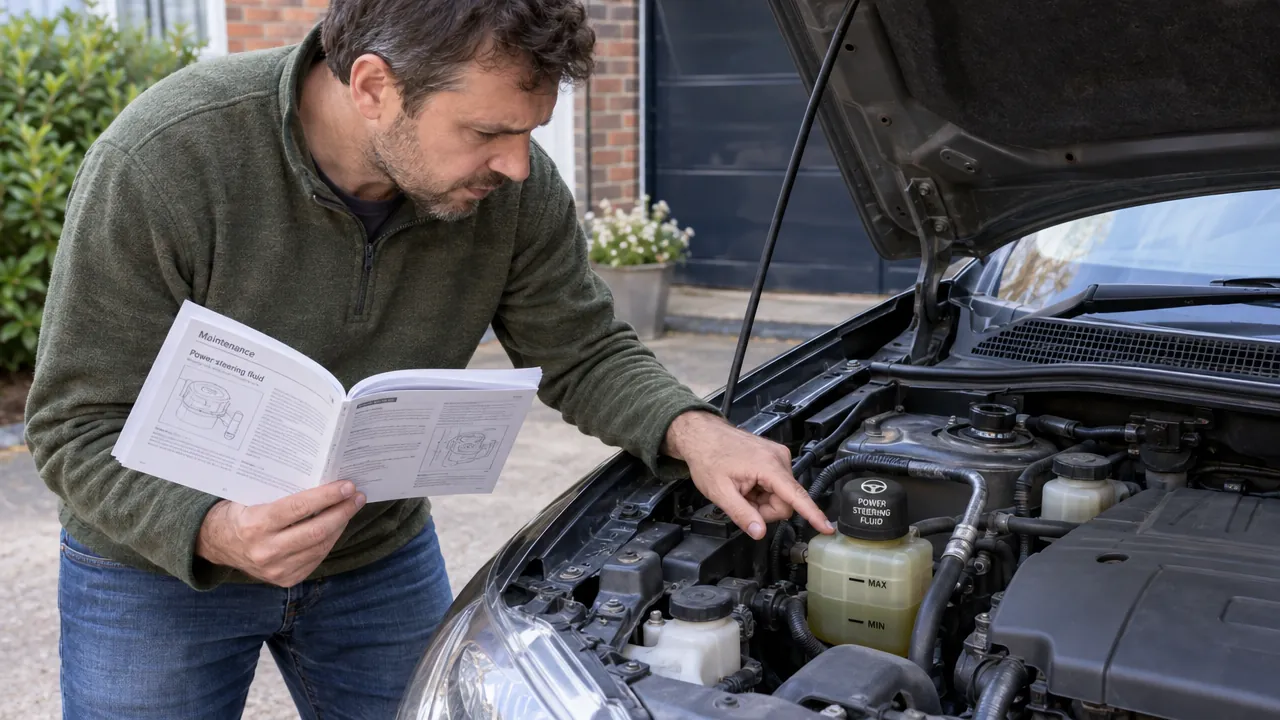
Power steering fluid allows a hydraulic steering system to make turning the wheel easier and more responsive. When the level falls, steering may feel heavy or sluggish, and the system can become noisy. Topping up is usually simple, but not every car has a fluid reservoir: electrically assisted steering needs no power steering fluid. Check your owner's manual before you start, particularly for the correct level-checking procedure.
Find the reservoir and check the level
Open the bonnet and look towards the front or side of the engine bay. The reservoir may say ‘Power Steering Fluid’ or ‘PS Fluid’, or carry a steering-fluid symbol. It may have a dipstick built into the cap or a translucent body marked MIN and MAX. If you cannot identify it confidently, use the vehicle handbook rather than guessing.
Follow the handbook's instructions for checking the level, including any hot or cold markings. Read the dipstick or look through the reservoir wall. Below MIN or Low means fluid is needed; at or near Full, no top-up is required. A level that repeatedly drops could mean a leak, which needs investigating rather than repeated refilling.
Choose the specified fluid
Different cars need different power steering fluids. Find the required specification in the handbook, on the reservoir label or on the manufacturer's website. A vehicle-registration lookup may help identify a product, but confirm its specification against the car's requirements. The wrong fluid can damage the steering system. Buy the correct type before opening the reservoir, and do not assume that fluids with similar-looking bottles are interchangeable.
Open the cap and add fluid slowly
With the engine off and the area around the cap clean, unscrew the cap anticlockwise. Keep dirt and debris out of the opening, as contamination can affect steering performance. If the cap carries a dipstick, put it somewhere clean while you work. Position a clean funnel over the opening to limit spills; wipe up any fluid that lands outside the reservoir.
Pour a small amount at a time and check as you go. The aim is to restore the specified level, not fill the container to its rim. If you are unsure how much to add, start by aiming between the MIN and MAX marks, then check again. Refer to the handbook if the marks differ according to fluid temperature or checking conditions.
Recheck the level and close the cap
Reinsert the dipstick if fitted and read it as the handbook directs, or check the level against the marks on the reservoir. Add a little more if needed until it reaches the appropriate Full mark. Avoid exceeding MAX: if you have overfilled it, draw the excess out with a clean syringe or turkey baster, taking care not to introduce dirt.
Refit the cap by turning it clockwise until it is secure, then look for any sign of leakage around it. Keeping the reservoir correctly filled helps protect the pump and other steering components, but a top-up will not repair a leak or another mechanical fault. Check the level regularly so that a persistent loss does not go unnoticed.
Take a cautious test drive
If the steering feels normal, take a short test drive after topping up. Notice whether the wheel remains heavy, whether there is a whining noise, or whether assistance feels jerky or inconsistent. If any of those problems persists, or you hear other unusual noises, arrange for a mechanic to inspect the car as soon as possible; do not continue driving if you cannot steer safely.
Why regular checks matter
A suitable fluid level helps the system deliver smooth, responsive steering, reduces noise and vibration, and can help prevent pump damage and extend the steering system's life. Regular checks may also reveal a leak early, before it leads to a more expensive repair. Topping up addresses a low level, but the cause of repeated fluid loss still needs attention.