
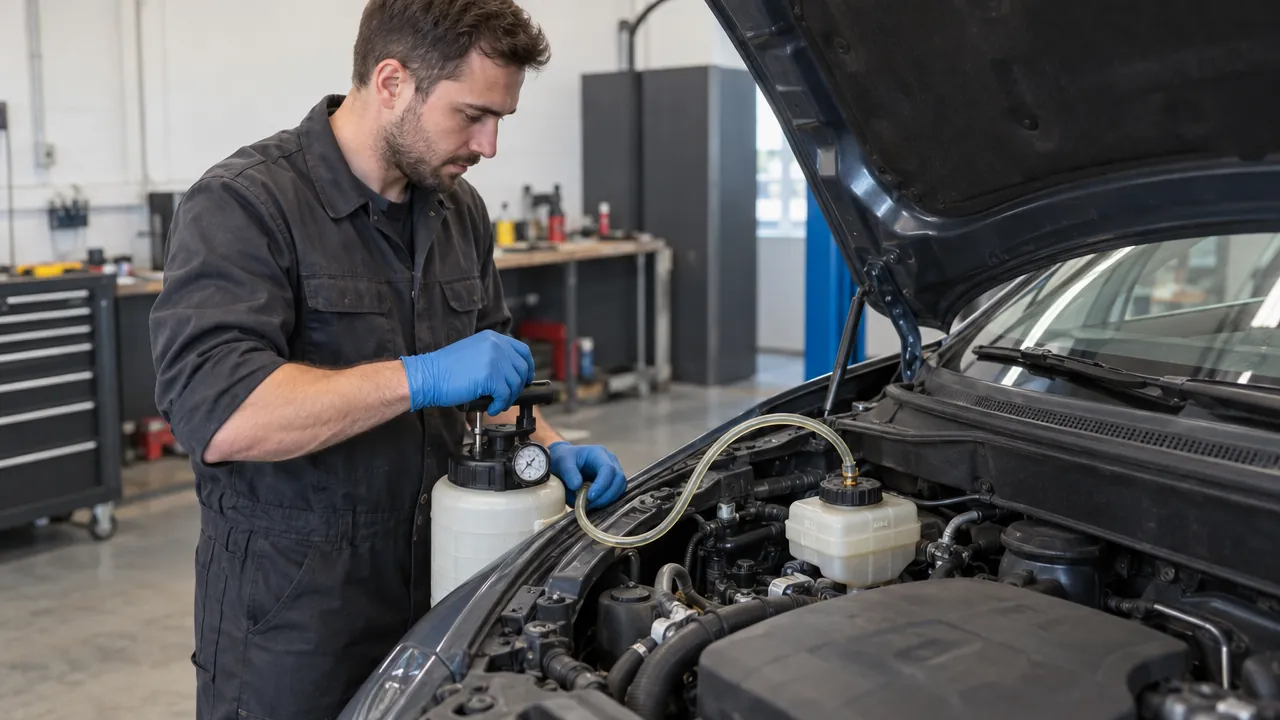
Brake fluid is easy to overlook because it sits out of sight, but it helps the brakes respond when you press the pedal. Keeping the correct fluid in good condition is part of maintaining a safe, roadworthy car in the UK. Replacement is more involved than simply filling a reservoir: the old fluid must be cleared from the braking system.
What brake fluid does
Brake fluid is a hydraulic liquid used in the braking systems, and in some clutch systems, of many vehicles. Pedal pressure is carried through the fluid to operate the brakes; the hydraulic system increases the force available at the wheels. The fluid also lubricates components and helps guard against corrosion. It needs a high boiling point because braking generates considerable heat, particularly if the brakes are used continuously on a long, steep descent.
Brake fluids are commonly glycol-ether-based or silicone-based. The correct specification matters: these are not interchangeable just because both are called brake fluid. Check the vehicle handbook for the required type, rather than choosing a bottle by price or appearance. The handbook should also set out the replacement interval for that particular vehicle.
Why and when to replace it
Over time, commonly used glycol-based brake fluid absorbs moisture from the air. This can reduce its boiling point and effectiveness under heavy braking and make corrosion inside the system more likely. Replacing old fluid with fresh fluid is therefore routine maintenance, not just a response to a braking fault. Topping up a reservoir does not remove the aged fluid already in the pipes and other components.
As a general guide, allow for a change every two years or 24,000 miles, whichever comes first. The appropriate schedule can differ with the car’s make and model, the fluid used and driving style, so follow the owner’s manual if it specifies another interval. Some vehicles may need an annual change, which could be arranged alongside a service or MOT. An MOT itself is not a substitute for a fluid change.
What happens during a change
A brake fluid change, also called a flush or replacement, means removing the old liquid and putting fresh fluid through the system. Because braking is safety-critical and trapped air can affect pedal operation, this delicate job is best left to a qualified mechanic, either at a garage or through a mobile service. It is not just a matter of pouring new fluid into the reservoir.
The mechanic takes old fluid out of the reservoir and refills it with the specified fresh fluid. They then bleed each wheel or brake circuit in the correct sequence, passing enough new fluid through to displace contaminated fluid and remove air. Some cars also need diagnostic equipment to run the procedure required by their ABS. The aim is to replace fluid throughout the system rather than leave pockets of old liquid behind.
How much might it cost?
As indicative UK figures, a brake fluid change starts at around £90 at a mechanic’s. The bill can be substantially higher for a large or premium vehicle. Using a higher-quality fluid and replacing the old solution may take the price above £120. These are guide figures, not a quote for your car; ask what fluid and work the garage includes before comparing prices.
Leaving fluid unchanged for a long time may also mean damage elsewhere in the braking system, with repairs costing considerably more than a routine change. If the reservoir level has fallen, have it checked rather than treating a top-up as a fluid change. A mechanic can establish what the system needs before carrying out a flush.