
Why your car’s air-con may stop blowing cold
Your car’s air-conditioning keeps the cabin cool in summer and helps improve the air quality inside the vehicle. It is easy to take for granted until warm air comes through the vents on a scorching British summer day. If the system is faulty or has stopped cooling properly, it may need regassing. This is usually a relatively straightforward, inexpensive job, but a regas will not solve every possible fault. Finding out why the air is warm matters before you pay for work that might not fix it.
What does regassing involve?
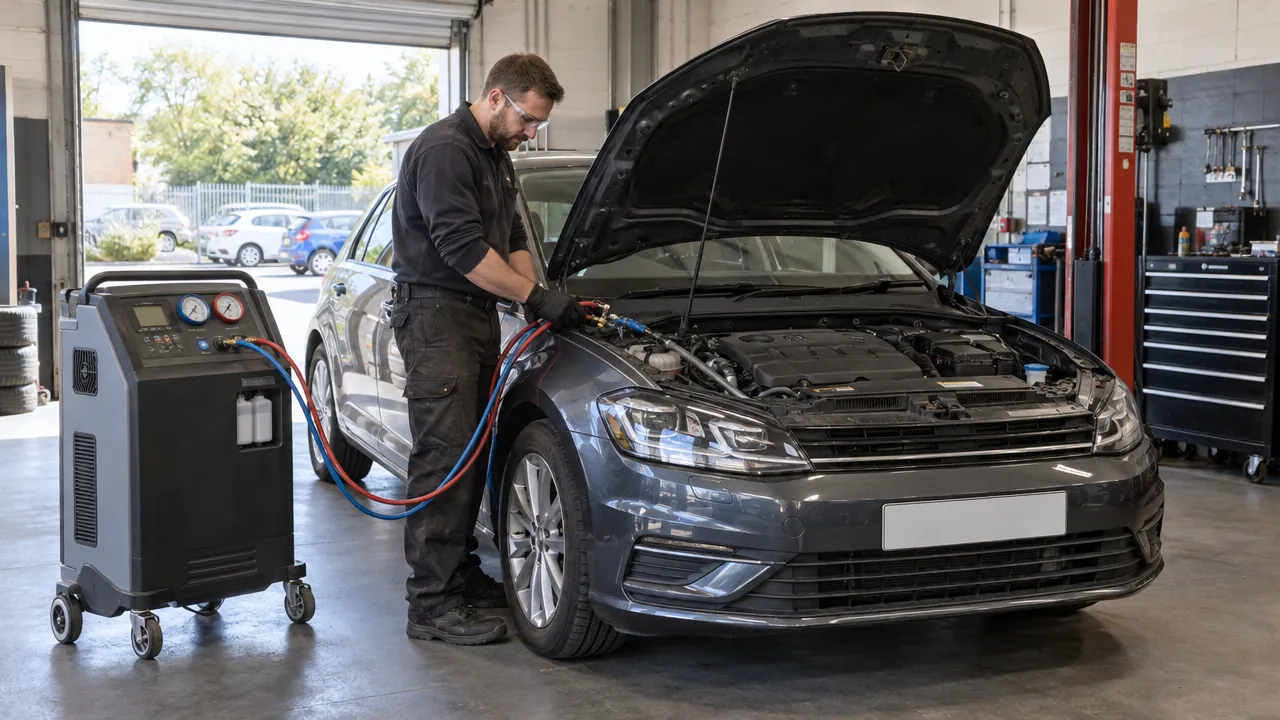
Regassing means removing the old refrigerant gas from the air-conditioning system and replacing it with new refrigerant so the air-con can blow cold again. If the air from the vents is less cool than it should be, a regas is a sensible first possibility to explore. A specialist should normally be able to complete the process in no more than an hour.
Low refrigerant is not the only possible explanation for warm air. A reputable mechanic can advise whether another fault is preventing the system from cooling. That distinction is useful: replacing the refrigerant alone will not put a separate fault right, even if the air-con initially appears to need attention.
Can you regas your air-con yourself?
You can buy an air-con regas kit, but attempting the job yourself is not recommended. Kits can cost almost as much as paying a specialist, and a mistake could leave you with a much larger repair bill. A specialist is also better placed to check for leaks and other problems rather than simply adding refrigerant. This is particularly important when the reason for the poor cooling is not yet clear.
There is a safety risk, too: refrigerant gas can cause painful freeze burns if it touches your skin or eyes. The potential cost of a mistake and the risk of injury are both reasons to leave the job to a specialist.
How can you tell if it needs regassing?
The main sign is that air from the vents is not as cool as it used to be. You may also find that switching the air-con off makes no noticeable difference to the air coming through. These signs make a check worthwhile, although they do not prove that refrigerant is the only issue. If you cannot remember when the system was last regassed, it is worth looking into rather than assuming its last service covered it.
Many specialists are happy to carry out an initial check for free. This can help establish whether regassing is appropriate or whether the loss of cooling needs a different repair. Describe what has changed about the air from the vents when arranging the check.
How much does a regas cost?
In the UK, expect roughly £50 to £200 for an air-con regas, depending on the system and where the work is done. Many garages charge in the region of £50, but that will not be the price for every car. Repairs for a separate fault may cost considerably more, so a regas quote is not necessarily the full cost of restoring cold air.
How often should air-con be serviced?
Most manufacturers recommend servicing a car’s air-con about every two years. Many drivers instead wait until it no longer blows cold. Waiting is unlikely to cause harm by itself, but poorly functioning air-con can make windows harder to demist in winter. It could also make the engine work harder and use more fuel. It is therefore worth arranging a system check when performance drops, even if you rarely need cooling at that time of year.
Is regassing included in a car service?
Routine car servicing helps keep a vehicle reliable and roadworthy, but it rarely covers the air-con system. Do not assume that the refrigerant was replaced during a recent service. A garage should be able to do a regas separately; many charge around £50, subject to the car and provider. An ordinary service and an air-con service are not necessarily the same job.
During an air-con service, the technician should check the system’s lubricant level and replace the old refrigerant with new gas up to the required level. They should also carry out a vacuum test for cracks or leaks that could prevent the air-con from working properly later. Those checks are particularly useful if the system has been losing its ability to cool, rather than simply feeling less effective on one hot day.
What happens if you do not regas it?
An air-con system that needs regassing will gradually become less efficient. The car can be uncomfortable in hot weather, and the windows may take longer to demist in winter. Leaving the system unused can cause longer-term trouble as well: pipes may crack and parts may seize up. Using the air-con throughout the year helps keep it in good condition, alongside getting it checked if its cooling declines.
What other maintenance helps?
Change the cabin filter regularly. If a musty smell comes from the vents, consider an anti-bacterial clean. A foul smell can be associated with mould build-up, so it does not necessarily mean the refrigerant needs replacing. Noting whether the problem is a smell, weak cooling or both will help when you describe it to a specialist. Regular use and attention to the filter address different aspects of keeping the system in good condition.
What might repairs or replacement cost?
Repairing a fault is different from regassing the system, and the price depends on the work needed. According to UK RAC figures dated July 2026, repairing leaks or replacing small air-con components costs £100 to £300. Major repairs, such as work following a compressor failure, range from £400 to more than £800. These are separate potential bills from the cost of a straightforward regas.
The same UK RAC figures put replacement of a car’s air-con at £500 to more than £1,000, depending on the vehicle and the extent of the work. The RAC gives £50 to £300 as the cost of fixing an air-conditioning fan or unit. That varies with the vehicle’s make, model and year and is unlikely to include regassing. The type of fault therefore matters as much as the initial symptom when considering costs.
What else can cause warm air?
If the system no longer blows cold, possible causes include a radiator issue, a clogged or damaged filter system, a cooling-fan problem or the need to recharge the air-con. A leak, blocked condenser unit, faulty electrics or broken compressor may also be responsible. Mould build-up can cause a foul smell. Because these problems require different work, have the system checked rather than assuming that every loss of cold air calls for a regas.