
Why tyre pressure matters
Correct tyre pressure matters in every season, especially when ice or standing water makes grip harder to maintain. Too little air increases the likelihood of a blowout, uneven tread wear and higher fuel consumption. Too much can also wear the tread unevenly and reduce grip on the road, increasing the risk of aquaplaning. Either extreme can undermine handling and, in severe cases, leave a tyre unsafe or illegal.
Tyre Safe has cited annual averages of 6,375 convictions, 2 million MOT failures and 190 deaths or serious injuries associated with dangerous tyres; these figures concern tyre safety generally, not pressure alone. An illegal tyre can mean a fine of up to £2,500 per tyre and three penalty points. Insurance may also be invalidated if an accident involves a vehicle with illegal tyres.
Where to find the recommended pressure
Start with the pressure label on the inside edge of the driver’s or passenger’s door, or sometimes inside the fuel filler flap. The owner’s handbook also gives the vehicle’s specified pressures. Check whether front and rear values differ, and use the figures for your car rather than a general average. Around 30–35 PSI is typical for many standard car tyres, but it is not a universal target. Electric cars often need higher pressures because their heavy batteries increase rolling resistance.
A registration-based online checker can provide separate front and rear recommendations. One example uses DVLA and HaynesPro data. Compare any lookup with the handbook: if the tyres differ from the original factory fitment, the results may differ slightly from the manufacturer’s figures. Seek professional advice if the correct setting for replacement tyres or wheels is unclear.
How to measure and adjust pressure
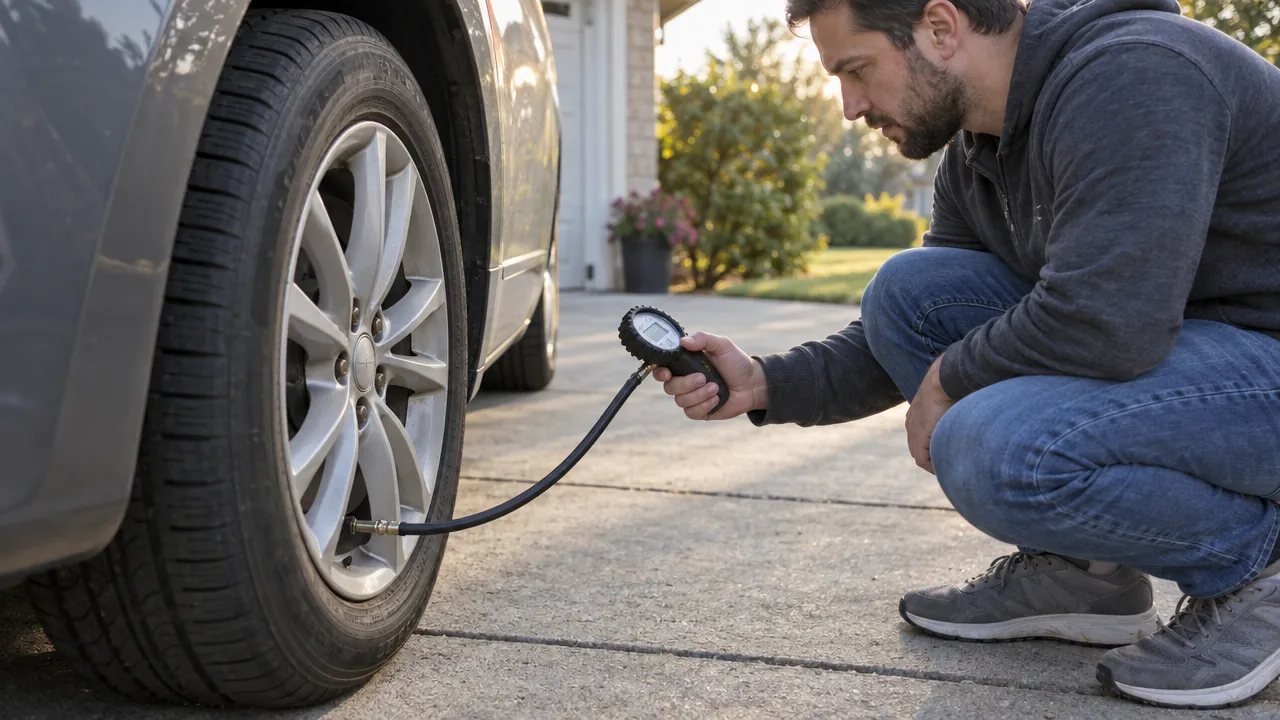
Use a tyre pressure gauge or digital inflator to measure each tyre in PSI, preferably before driving while the tyres are cold. Remove the valve cap, attach the gauge firmly and compare the reading with the specified figure. Add air if the pressure is low; if it is high, release some and measure again. Check each tyre against its appropriate front or rear figure, then replace the valve caps. A tyre specialist can help if you lack a gauge.
Some tyre centres offer a free check covering pressure and adjustment, tread depth and a general inspection. A separate five-point safety check may cover headlights and brake lights, wiper blades and windscreen condition, battery health and the MOT due date. Such checks can be useful after a car has stood unused, but confirm what is included: they do not replace routine pressure measurements.
When to check and what warnings mean
Check pressures at least once a month and before a long journey. Driving warms tyres and can make an immediate reading misleading, so measure them cold where possible. Regular checks can help tyres last longer, improve fuel economy and reduce accident risk, saving money over time. A tyre pressure monitoring system (TPMS) may warn of low pressure with a dashboard light, but it does not replace checking with a gauge.
If the warning system itself is faulty, have its sensor valves checked and serviced or replaced as necessary. A faulty TPMS can cause an MOT failure for vehicles in the categories to which that requirement applies. If a warning comes on, check pressures and investigate any tyre that keeps losing air rather than relying on the light alone.
If a tyre keeps losing air