A warning light can appear without any obvious change in how your car drives. That does not mean it is safe to ignore. Some dashboard symbols simply tell you a feature is in use; others point to faults that need attention soon or require you to stop as soon as it is safe. Knowing the difference can help you respond before a problem becomes more serious.
Start with the colour and the message
Dashboard lights are indicators for the car’s systems. Green or blue usually provides information, such as whether the headlights are on. Amber or yellow generally means something needs attention. Red signals a more urgent problem: stop driving when it is safe to do so and assess the warning. The colour is a useful starting point, but the particular symbol and how the car behaves matter too.
Modern cars can detect a wide range of faults through their onboard diagnostic systems. A warning may relate to the engine, braking, electrical equipment or another system. Ignoring it could allow damage to develop, leave you stranded or contribute to an MOT failure. The responses below cover common lights, but they do not replace a diagnosis when a fault remains.
Engine, temperature and oil warnings
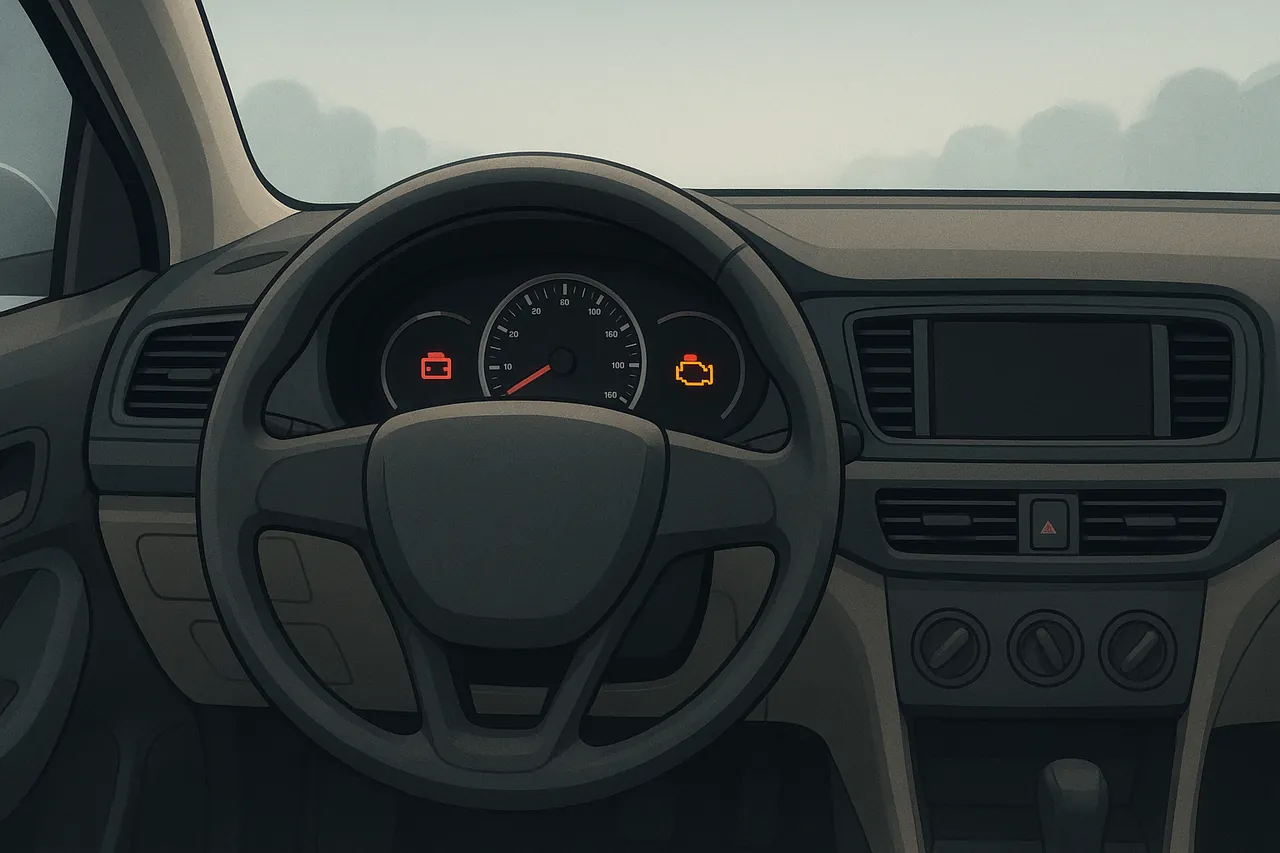
The check engine light, also called the malfunction indicator lamp, points to a possible engine or emissions-system issue. A loose fuel cap can trigger it, but so can a more serious fault. Check the cap first. If the light stays on, arrange a diagnostic check rather than assuming the cause is minor. Continuing to drive with an unresolved fault could damage the engine or catalytic converter; engine and emissions problems can also affect MOT results.
An engine temperature warning means the engine is overheating. Low coolant, a radiator problem or a faulty thermostat may be responsible. Pull over safely and switch off the engine. Wait for it to cool before checking the coolant level, and seek assistance rather than continuing to drive with an overheating warning. Prompt action matters because excessive heat can damage the engine.
An oil pressure warning is especially urgent: it indicates dangerously low oil pressure, and driving on could cause severe engine damage. Stop as soon as it is safe, switch off the engine and check the oil level. Top it up if needed. If the warning remains on, do not drive the car; get assistance. Adding oil is not a reason to keep going while the light is still illuminated.
Brakes, grip and steering
The brake warning light may indicate low brake fluid, worn pads or a more serious braking fault. Stop safely and check the brake fluid level. If the level is normal but the warning remains, avoid driving and have the car inspected immediately. Because the fault may affect stopping power, this is not a light to dismiss. Brake-system problems can also affect whether a car meets MOT requirements.
An ABS light means there is a fault with the anti-lock braking system. Ordinary braking may still work, but the ABS function may be unavailable. Drive cautiously and arrange an inspection. An illuminated ABS warning during an MOT will result in a failure. Do not treat the fact that the brakes still appear to work as proof that the fault has resolved.
The traction control light needs a different interpretation depending on what it is doing. If it flashes, the system is actively working, for example on a slippery surface. If it stays on, there may be a fault. The car may still be drivable, but traction control helps maintain grip in poor conditions, so a persistent warning deserves attention.
A power steering warning indicates a problem with steering assistance. The wheel may become stiff or feel unresponsive, making the car unsafe to drive, particularly at low speeds. Stop safely. If the system is hydraulic, check the power steering fluid; on newer cars with electrical systems, have a mechanic inspect the fault. Do not assume steering is unaffected simply because the car can still move.
Battery, airbags, lights and fuel
The battery charge warning means the battery is not being charged correctly. The cause could be the alternator, the battery or the wiring. Switch off non-essential electrical equipment and get the car to a garage before the battery loses its charge. Acting promptly can help avoid being stranded with a dead battery, even if the car seems to be running normally when the light first appears.
An airbag warning signals a fault in the airbag system. Airbags may not deploy in a crash, so arrange an inspection as soon as possible rather than ignoring the symbol. An active airbag warning will also cause an MOT failure. Unlike a reminder about a routine vehicle setting, this light points to a safety system that may not work as intended.
A headlight or taillight symbol can indicate that lights are switched on or off; a warning may also point to a failed bulb. Inspect the car’s lights, replace any that do not work and check the headlight beam alignment. A failed lamp does not necessarily mean an MOT failure in every case, but it still needs attention and could draw police attention.
A low fuel light means it is time to refuel. Head to the nearest station rather than letting the tank run dry, especially on a long journey. Repeatedly driving with very little fuel can damage the fuel pump over time. It is a straightforward warning, but leaving it until later can still turn a routine stop into a breakdown.
Respond to the warning, not just the symbol
When a light appears, identify it and consider its colour, whether it stays on or flashes, and whether the car’s braking, steering or engine behaviour has changed. Red oil or temperature warnings call for a safe stop and immediate action; other persistent faults may need cautious driving and prompt inspection. Taking the warning seriously helps protect both the car and your ability to drive it safely.