
A car can feel perfectly normal around town yet develop a shaking steering wheel on the motorway. An unbalanced wheel is one possible cause, and the change may be gradual enough to overlook. Although balancing is usually a straightforward workshop job, leaving the vibration unchecked can allow tyre wear and other problems to build. The location and speed of the vibration offer clues, but they do not replace an inspection and a measurement.
What does an unbalanced wheel mean?
A wheel is unbalanced when weight is unevenly distributed around the rotating wheel-and-tyre assembly. Even a small difference can make it rotate less smoothly, with vibration becoming more apparent as speed rises. Imbalance can develop as tyres wear, after a pothole impact or kerb strike, or when a tyre is fitted or repaired without a thorough balance check. A balance weight may also be missing or incorrectly positioned. There need not be one dramatic fault: small changes during ordinary driving can be enough. Balancing corrects weight distribution so the assembly rotates more evenly.
Signs and possible effects
Vibration is often the first noticeable sign. A shake felt mainly through the steering wheel commonly points towards a front wheel; vibration through the seat or floor more often suggests a rear wheel. It may appear at motorway speeds and fade at lower speeds, making the car seem fine on short local journeys. Those patterns are useful to tell a garage, but they cannot prove which wheel, or even whether imbalance is the cause. Note when the shaking begins and whether it changes with speed.
An unevenly rotating wheel can affect how consistently its tyre meets the road. Over time, the tyre may develop irregular wear, including flat spots or a scalloped pattern, and its useful life may be shortened. Correct inflation and alignment do not rule out imbalance. Equally, unusual tyre wear is not proof of it: the garage should inspect the tyre rather than assume balancing alone will solve the problem. A driver might first notice that relatively new tyres look worn sooner than expected.
As the vibration worsens, the steering can feel vague or unsettled. The car may seem less stable through bends or during lane changes, particularly at higher speeds. That can make driving tiring and reduce confidence, even if the vehicle still feels manageable. Noise or general discomfort at speed may accompany the vibration. None of these sensations identifies the fault conclusively, so describe them rather than requesting a particular repair without a check.
Repeated vibration also puts extra load on steering and suspension parts. Wheel bearings, shock absorbers and bushes are among the components that may be affected by continued use. Wear is not necessarily obvious at first; a later knocking or droning noise deserves investigation rather than being dismissed as another symptom of imbalance. A small balancing job may otherwise be accompanied by more extensive work as related wear develops.
The source also associates unbalanced wheels with greater rolling resistance and poorer fuel economy over longer distances. If a car seems to need fuel more often, however, that change alone is too broad a clue to diagnose wheel imbalance. The stronger signs are speed-related vibration and the condition of the tyres. Fuel use is best considered alongside them, not treated as a balancing test.
Is it dangerous to keep driving?
Imbalance is not usually an immediate safety failure. Many affected cars remain driveable, which makes postponing a check tempting. The concern is that vibration and uneven loading continue: tyre wear can increase, components can face added stress, and the car may feel less settled in situations that demand precise control. If the handling changes or the tyres are visibly damaged, do not assume a routine balance is all that is needed. Arrange an inspection so the condition of the wheels, tyres and relevant parts can be assessed. Acting while a vibration is mild can also prevent a complaint from becoming a larger repair.
Balancing and alignment are different jobs
Wheel balancing deals with the distribution of weight in each wheel-and-tyre assembly. A machine measures the assembly as it rotates, allowing a technician to position weights to counter an imbalance. Balancing is commonly checked after tyre fitting or repair, or when a driver reports vibration, noise or discomfort at speed. It can address wear associated with an unevenly rotating wheel, but it does not change where the wheels point or how they sit relative to the car.
Wheel alignment concerns the position and angles of the wheels relative to the vehicle and road. Clues to an alignment problem include a car pulling to one side, a steering wheel that feels off-centre, or wear concentrated on the inner or outer edge of a tyre. These signs warrant a different check from measuring rotating weight. A garage may need to examine both issues if the symptoms or tyre wear do not clearly point to one cause.
A car can have correctly aligned wheels and still vibrate because an assembly is unbalanced. Conversely, adding balance weights cannot correct pulling or edge wear caused by alignment. Explaining when and where a symptom occurs helps the garage choose the right checks instead of assuming the two services are interchangeable.
How a garage checks and corrects imbalance
First, describe the complaint as precisely as possible: which speeds bring on the vibration, whether it is felt through the wheel, seat or floor, and whether it disappears when slowing down. Mention recent tyre fitting or repair, a pothole or kerb impact, and any change in noise or handling. This account helps narrow down which wheels to inspect, but the repair should still be based on what the inspection and equipment show.
The technician should examine the wheels and tyres for visible damage, tyre condition, missing weights and any build-up on a wheel that could affect its balance. Tyre pressures and the pattern of wear can add context; damage or an alignment concern may need attention in its own right. Checking these points before balancing matters because a machine reading should not be treated as a substitute for inspecting the assembly being measured.
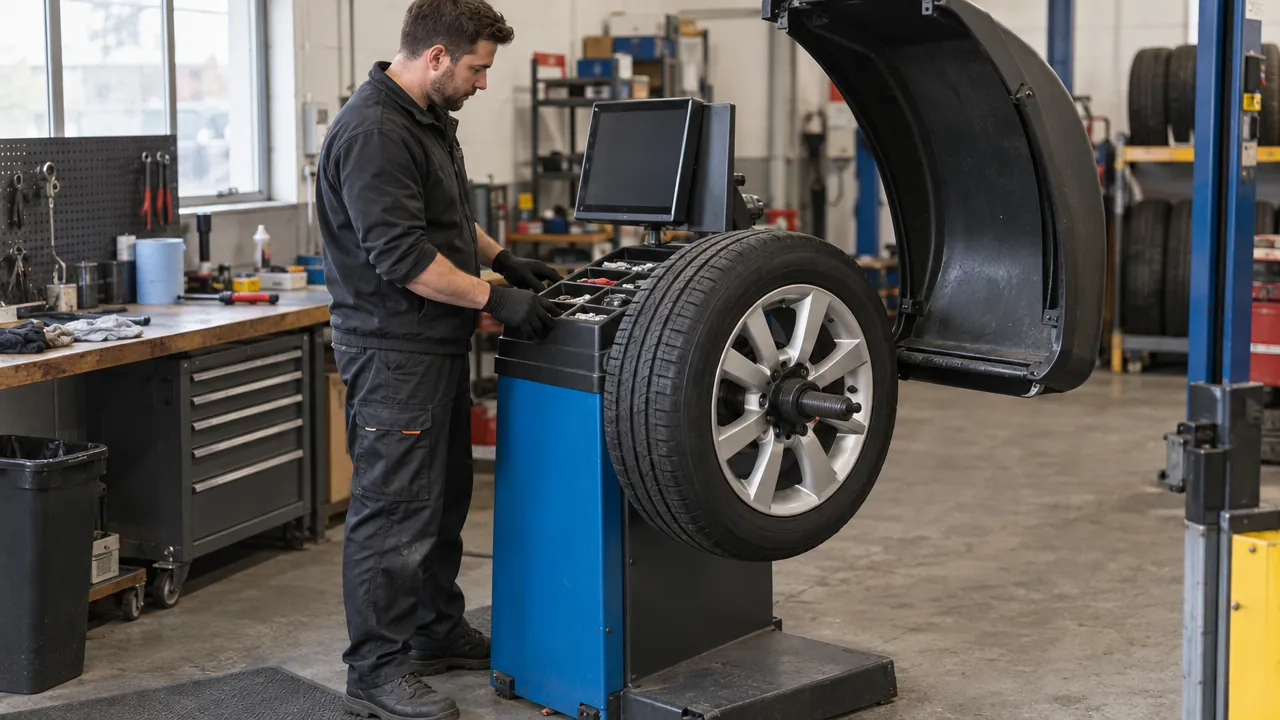
To measure imbalance, the wheel-and-tyre assembly is mounted on a balancer and rotated. The machine identifies weight differences that may be too small to see by eye and indicates where correction is needed. The technician applies weights accurately to restore smoother rotation, rather than guessing or merely masking the vibration. If the original complaint persists after balancing, it calls for further diagnosis, not an assumption that every vibration has the same cause. Larger wheels and low-profile tyres can leave less room for imprecise work.
Why the workshop process matters
A suitable balancer should match the vehicles a garage handles, its workload and the precision needed. A compact system may suit a smaller workshop, while a busy one may value quicker procedures, automatic measurement or dimension entry. Diagnostic equipment can provide more information for difficult vibration complaints. Wheel aligners, lifts and tyre changers support other parts of wheel and tyre servicing, but none makes balancing and alignment the same operation.
For a garage, resolving a suspected imbalance is about more than stopping a shake on one drive. Accurate inspection and correction help avoid repeat visits and premature tyre wear. If a car leaves after workshop work and later develops vibration or handling complaints, a driver may reasonably question whether the wheels were checked, even when imbalance was not the reason for the visit. A consistent process gives the technician a basis for explaining what was found and what, if anything, still needs investigation.
For drivers, the practical step is simple: report a recurring speed-related vibration promptly, including where it is felt, and have the wheels and tyres inspected. Balancing may be the answer, but a proper check distinguishes it from alignment trouble, tyre damage and other possible faults. Addressing the cause early protects ride comfort and reduces the chance of avoidable wear.