The timing belt is hidden from view in many cars, but it has a vital job. It keeps parts of the engine moving in step. Unlike brakes or tyres, it may give little warning before it fails, so waiting for an obvious symptom can be a costly approach.
A timing belt change is best planned around the vehicle’s recommended interval, its age and how it has been used. That matters even when the engine seems to be running normally. If the replacement history is uncertain, finding out where the car stands is more useful than relying on its mileage alone.
Why age and mileage both matter
Most manufacturers recommend timing belt replacement between 60,000 and 100,000 miles, or every five to seven years, whichever comes first. The interval for a particular vehicle should guide the decision, but reaching neither limit is not a guarantee that the belt is sound. Recommended intervals assume conditions that may differ from everyday use.
Short journeys, traffic and stop-start driving place different demands on engine components from long motorway runs. A belt also ages while the car is parked: its rubber can harden, its fibres can weaken and tension can reduce. Infrequent servicing or oil contamination may shorten its working life further. A second car or a vehicle used mainly for local trips can therefore need a belt change despite low mileage.
There is rarely a reliable sequence of warning signs before a belt breaks. By the time a problem becomes noticeable, internal damage may already be occurring. Checking the age and recorded replacement date is a better way to plan than waiting for a noise or a change in how the car drives.
What the belt does and why failure matters
The belt synchronises the crankshaft and camshaft, keeping the movement of the pistons and valves correctly timed. If the belt slips or snaps, that timing is lost. In many engines, pistons and valves can collide, bending valves, damaging pistons and, in some cases, leaving the engine beyond economical repair.
That is why an unexpected failure can cost far more than a planned replacement. Repairs may involve the cylinder head, new valves and substantial labour; in severe cases, a replacement engine may be needed. Diesel engines typically have higher compression ratios, and belt failure can cause particularly serious damage. Planning the change before the interval is exceeded is especially important when the consequences could be severe.
What a replacement job may include
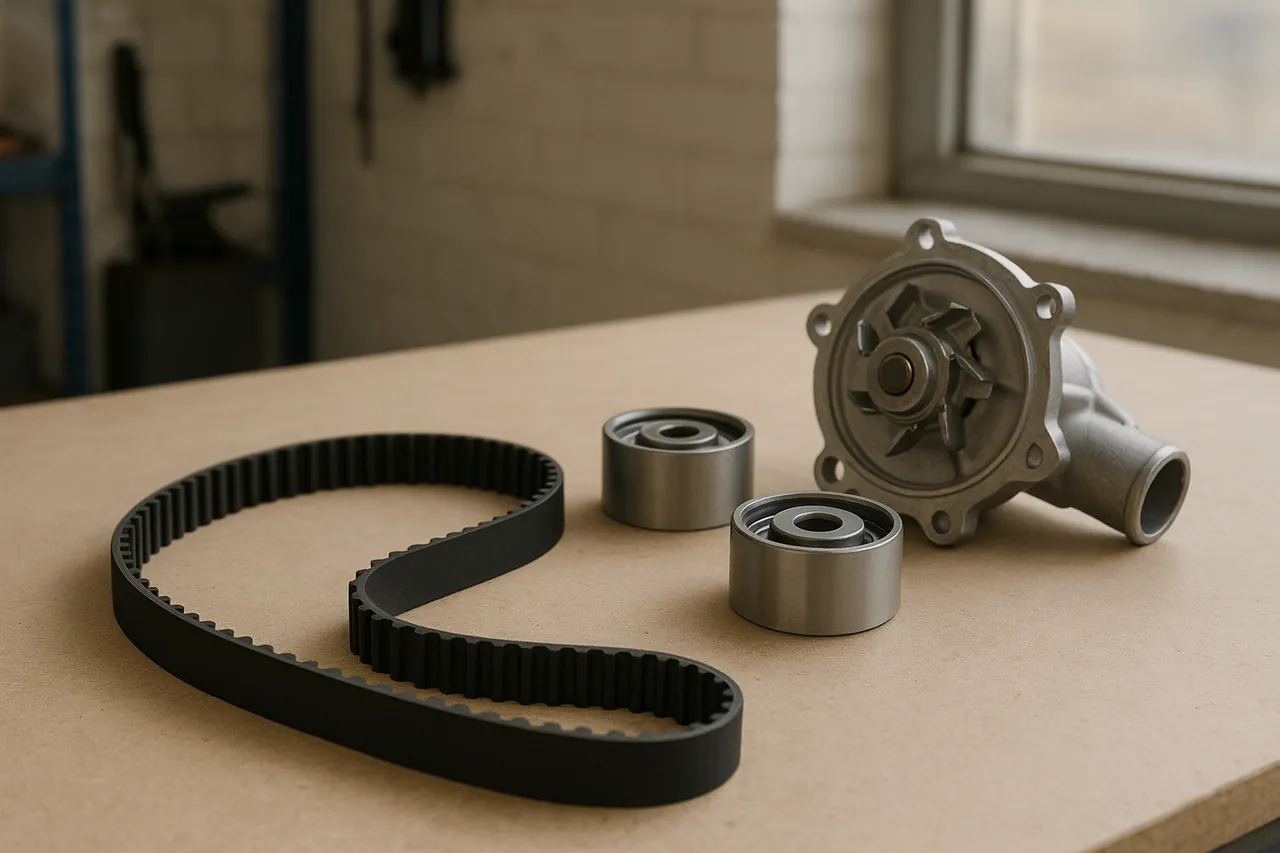
A cambelt replacement is often more than fitting a new belt. Depending on the engine, the work may include tensioners, pulleys and seals. Many engines also call for the water pump to be replaced at the same time. Because access and labour overlap, doing that work together can avoid paying for much of it again if the pump fails soon afterwards.
A low quote is worth checking against the work it covers. It may exclude parts that ought to be changed, rely on reused components or leave too little time for a careful job. Correct tension, torque settings and procedures aligned with the manufacturer’s requirements matter. Replacing only the belt when associated parts need attention can lead to repeat work.
An experienced technician can assess the accessible belt area, listen for tension-related issues and look for oil leaks that may accelerate wear. This can help judge whether immediate work is needed. It is not a way to prove that an old belt will last: many belts are enclosed, and a visual check cannot reliably reveal internal wear or material fatigue.
Costs, records and planning ahead
The price of a timing belt change depends on the engine’s design, the labour involved and which additional components are replaced. A planned job avoids the much larger repair bill that can follow a failure. When comparing quotes, the list of included parts and work is therefore as important as the headline price.
Service records matter, particularly when buying or selling a car. Evidence of a recent belt change gives a clearer picture of whether the replacement interval has been met. Buyers may be cautious when the history is uncertain; a documented change can support resale value and help a vehicle sell sooner.
If your car is nearing the upper end of its replacement interval, is over five years old with its original belt, or has an incomplete service history, have its position checked. The result may be that no immediate replacement is needed. Either way, knowing the belt’s age, mileage and history makes it easier to plan before a breakdown forces the decision.
Common timing belt questions
How often does a timing belt need replacing? For many vehicles, the recommended window is 60,000 to 100,000 miles or five to seven years, whichever comes first. Consider both limits rather than treating low mileage as proof that the belt is still suitable.
What happens if one snaps while driving? In many engines, the pistons and valves can collide immediately. The resulting internal damage may require extensive repairs or, in some cases, an engine replacement.
Is a timing chain better? Chains generally last longer than belts, but they are not maintenance-free. A chain can stretch or fail, and repairs when it develops a problem are often more expensive.
Can a belt be checked by looking at it? Sometimes part of the belt can be inspected, but many are fully enclosed. Its appearance alone cannot reliably establish whether its internal materials have weakened.
Should the water pump always be changed with the belt? It is often sensible in engines where the two jobs share substantial labour, and many engines call for both to be replaced together. The appropriate work depends on the engine and the components involved.